
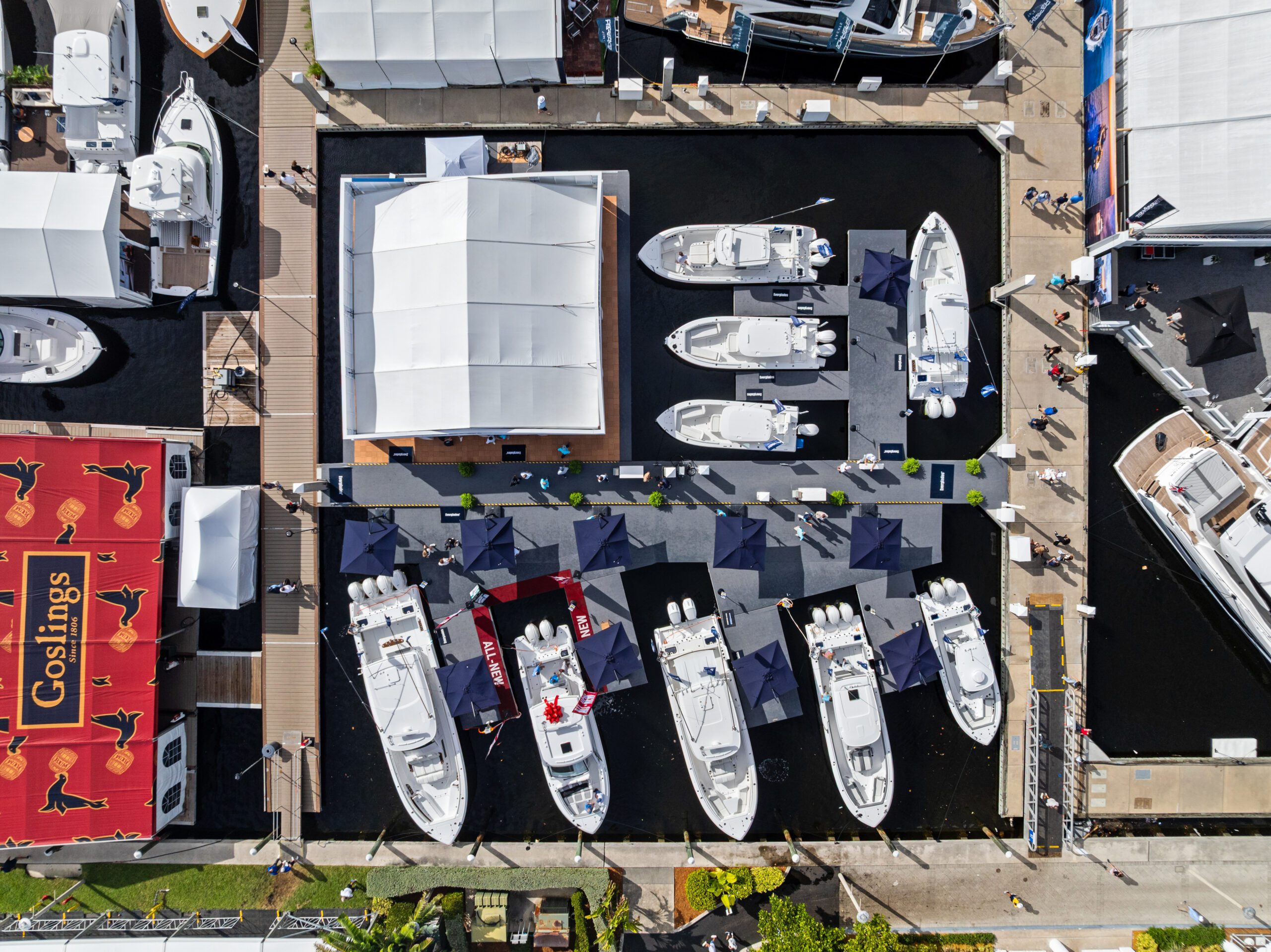
Walking the docks at the Fort Lauderdale International Boat Show can be overwhelming. With hundreds of boats to see across multiple waterfront locations, it is easy to get distracted by styling, electronics and flashy features.
But when you are shopping for a center console boat, the most important things are often the features you cannot fully appreciate from the dock.
A boat can look impressive sitting in the water. The real question is how it will perform when you are offshore, carrying your family, chasing fish, cruising to the sandbar or heading home when the weather changes.
Whether you are buying your first center console or comparing your next boat, use this checklist to look beyond the surface at FLIBS.
1. Start With the Hull and Ride
The hull is the foundation of the boat, and it has a major impact on how the boat handles and rides.
When you step aboard a center console at the show, ask the representative about the hull design and how it is engineered to perform in real-world conditions.
Look for:
- Hull shape and deadrise
- Overall hull construction
- Stability at rest
- Performance in rougher water
- How the boat handles turns
- Spray control
- Bow entry
- Ride comfort at cruising speed
Do not judge a boat solely by how it feels while tied to the dock. Ask how it behaves offshore and, if possible, arrange a sea trial.
2. Ask How the Boat Is Built
Two boats can look similar on the outside while being very different underneath.
Ask what materials are used, how the hull and deck are constructed, and how critical components are integrated into the boat.
Construction questions worth asking include:
- How is the hull constructed?
- How are the deck and structural components bonded?
- What type of reinforcement is used?
- How are through-hulls and other critical components installed?
- How is water intrusion addressed?
- What does the manufacturer do to ensure consistency from boat to boat?
A quality center console should be engineered as a complete system—not simply assembled from individual components.
3. Look at the Layout From a Real-World Perspective
A center console should work for the way you actually use your boat.
Instead of simply asking whether a boat has enough seating, walk through how you would spend a typical day aboard.
Can you comfortably move from the bow to the stern? Is there enough room for people to fish without constantly moving around each other? Can passengers find comfortable seating while underway?
Pay attention to:
- Walkaround space
- Bow seating
- Helm seating
- Aft seating
- Boarding access
- Freeboard
- Handholds
- Traffic flow
- Usable deck space
Center consoles are popular partly because their layout provides access around the entire boat. That open, walkaround design can be especially valuable for fishing, entertaining and family boating.
4. Inspect the Storage—Not Just the Storage Count
“Plenty of storage” does not necessarily mean the storage is useful.
Open every compartment you can.
Look for storage that is:
- Easy to access
- Properly sized
- Dry and protected
- Conveniently located
- Dedicated to specific equipment when appropriate
Think about everything you actually carry: life jackets, fishing tackle, rods, dive gear, water toys, coolers, safety equipment, dock lines and personal belongings.
Then ask yourself: Where would all of this go?
A well-designed boat makes it easier to keep the deck clear and the equipment organized.
5. Evaluate the Helm From the Driver’s Seat
Do not just look at the helm—sit in it.
Your position at the helm affects visibility, comfort and confidence behind the wheel.
Check:
- Forward visibility
- Visibility to the sides
- Seating position
- Standing and seated driving positions
- Steering wheel position
- Throttle placement
- Switch layout
- Screen visibility
- Wind protection
- Access to controls
Modern center consoles can also incorporate sophisticated marine electronics, including advanced fishfinding and navigation technology.
But the best electronics package is only useful if the helm is designed so the captain can actually use it comfortably while underway.
6. Look Beyond the Screen Size
It is easy to be impressed by a large multifunction display at a boat show.
But bigger screens do not automatically make a better helm.
Ask:
- Are the electronics integrated into the helm?
- Can you easily see the displays from your normal driving position?
- Are critical controls easy to reach?
- Is the layout intuitive?
- Can the system be upgraded as technology changes?
- Is the electronics package appropriate for how you boat?
Technology should enhance the boating experience—not complicate it.
7. Pay Attention to Fishing Features
If fishing is one of your primary reasons for buying a center console, evaluate the boat as a fishing platform.
Look for:
- Rod storage
- Fish boxes
- Livewells
- Tackle storage
- Outrigger compatibility
- Fishability around the bow
- Fishability around the stern
- Washdown systems
- Cockpit space
- Access to the water
The advantage of a center console is its ability to provide access around the perimeter of the boat, giving anglers room to move when fighting a fish.
But not every center console is optimized for the same type of fishing. Think about whether you primarily fish offshore, inshore, with a few people or with the entire family.
8. Don’t Forget About Family Comfort
A center console can be an incredibly versatile family boat.
If your boat will be used for more than fishing, evaluate how comfortable it is for everyone aboard.
Look at:
- Comfortable seating
- Shade
- Boarding access
- Swim access
- Grab rails and handholds
- Cupholders
- Cooler placement
- Easy movement around the boat
- Protection from spray
- Space for children and adults
The goal is to find a boat that works for the whole family—not one that only works when everyone onboard is fishing.
9. Ask About Safety Features
Safety should be part of your boat-shopping checklist from the beginning.
Look closely at:
- Freeboard
- Handholds
- Railings and grab points
- Boarding access
- Deck layout
- Visibility from the helm
- Bilge access
- Electrical systems
- Through-hull fittings
- Flotation and buoyancy
Also ask the manufacturer how safety is incorporated into the boat’s overall engineering and construction.
A boat should give you confidence not only when the weather is perfect, but when conditions become less predictable.
10. Inspect the Details You Will Live With Every Day
At a boat show, it is easy to focus on the big-ticket features.
Instead, spend a few minutes looking at the small details.
Open the hatches. Sit in the seats. Move around the deck. Look underneath the console. Check the hinges, latches, hardware and upholstery.
Ask yourself:
Does this feel like a boat that was designed for years of use?
Attention to detail can tell you a lot about how a manufacturer approaches the entire boat.
11. Ask About How the Boat Is Designed for the Long Term
A boat is a significant investment, so think beyond the day you take delivery.
Ask about:
- Warranty coverage
- Service and support
- Dealer network
- Parts availability
- Maintenance access
- Engine options
- Electronics support
- Resale considerations
You are not only buying a boat. You are choosing a manufacturer and a network that will be part of your ownership experience.
12. Take a Step Back and Think About How You Actually Boat
After walking through several center consoles at FLIBS, it can become difficult to remember which boat did what.
Before making a decision, write down your priorities.
For example:
My must-haves:
- Offshore capability
- Comfortable ride
- Family-friendly seating
- Fishing functionality
- Plenty of storage
- Easy-to-use helm
My nice-to-haves:
- Premium audio
- Advanced electronics
- Additional seating
- Extra shade
- Specific fishing accessories
This helps you evaluate boats based on what matters to you instead of simply choosing the boat with the longest feature list.
What Makes a Center Console Stand Out?
The best center console is not necessarily the one with the most features.
It is the one where the hull, construction, layout, technology, fishing features, comfort and safety all work together.
That is what you should be looking for as you walk the docks at the Fort Lauderdale International Boat Show.
And when you step aboard an Everglades, take your time.
Open the hatches. Walk the deck. Sit at the helm. Look at the construction. Imagine your family aboard. Picture a day offshore. Think about how the boat will perform not just at the boat show, but years after you leave it.
Because the right boat should do more than look good at the dock.
It should be built for the way you command the water.
See Everglades Boats at FLIBS
The Fort Lauderdale International Boat Show returns October 28–November 1, 2026. FLIBS is the world’s largest in-water boat show, with more than 1,300 boats on display across six locations.
If you are shopping for a center console at FLIBS, make Everglades part of your list.
Explore the Everglades lineup and see how our boats are engineered for offshore performance, fishing, family boating and everything in between.
